Road traffic
Is our road suitable?

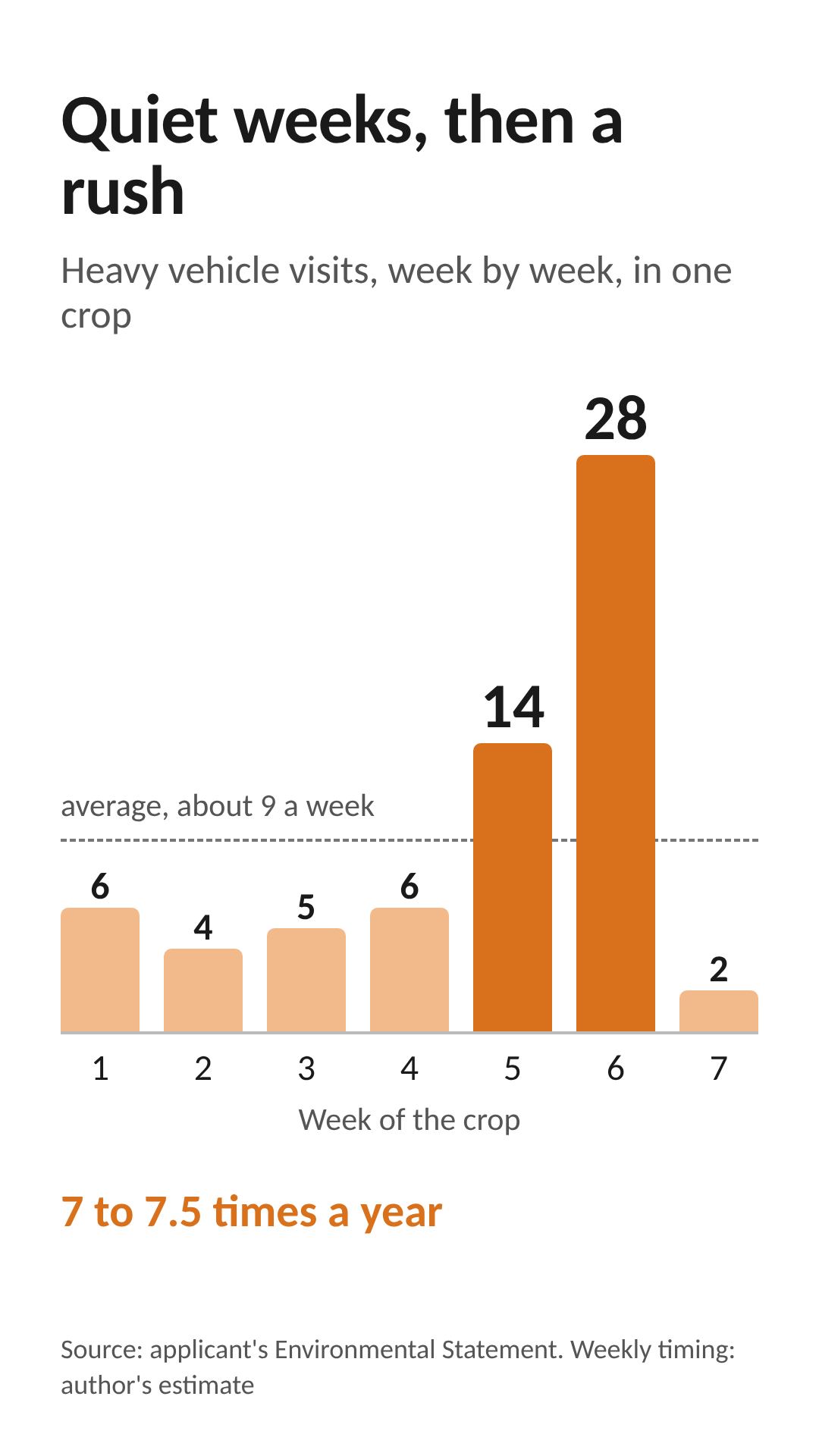
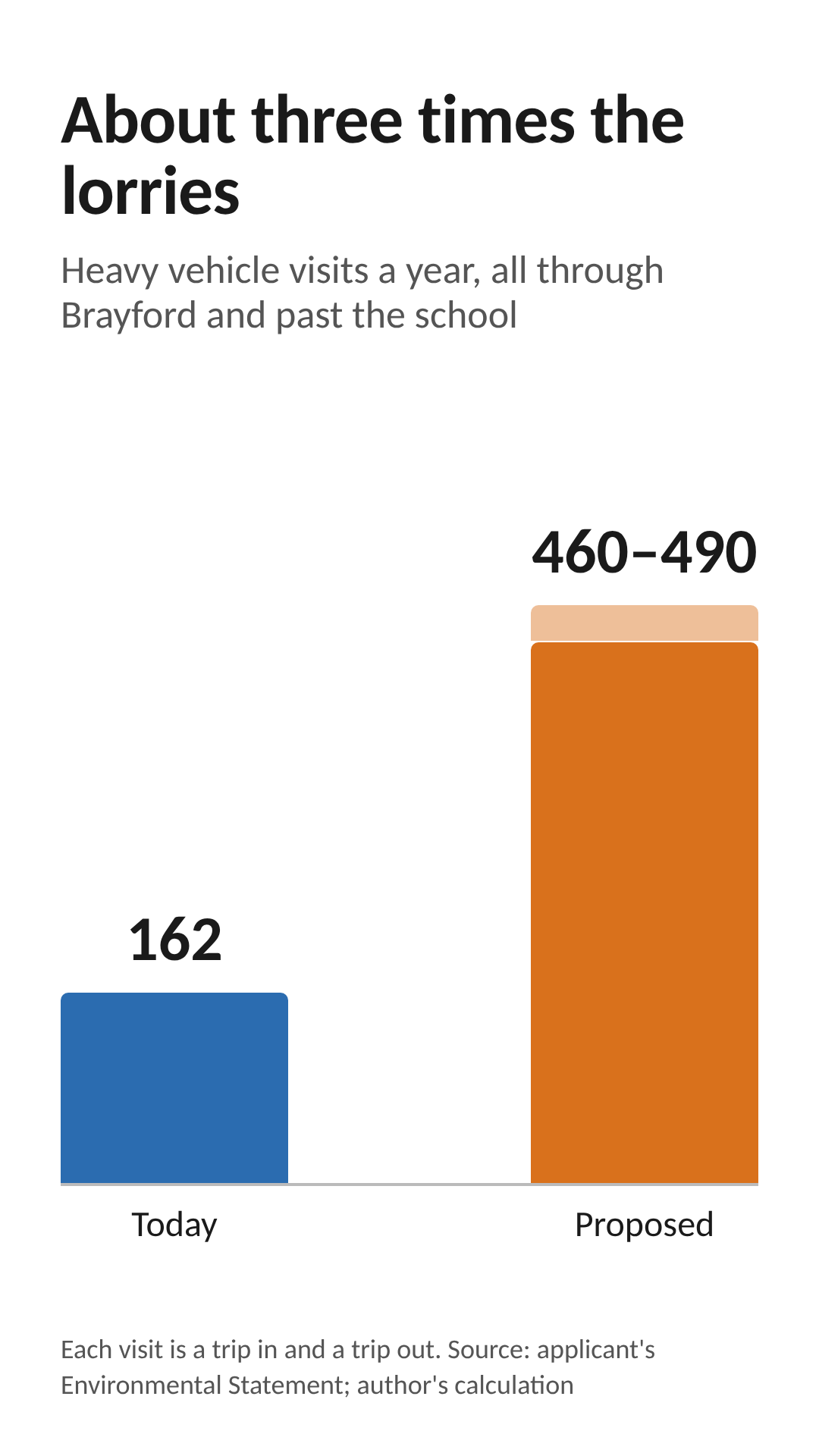
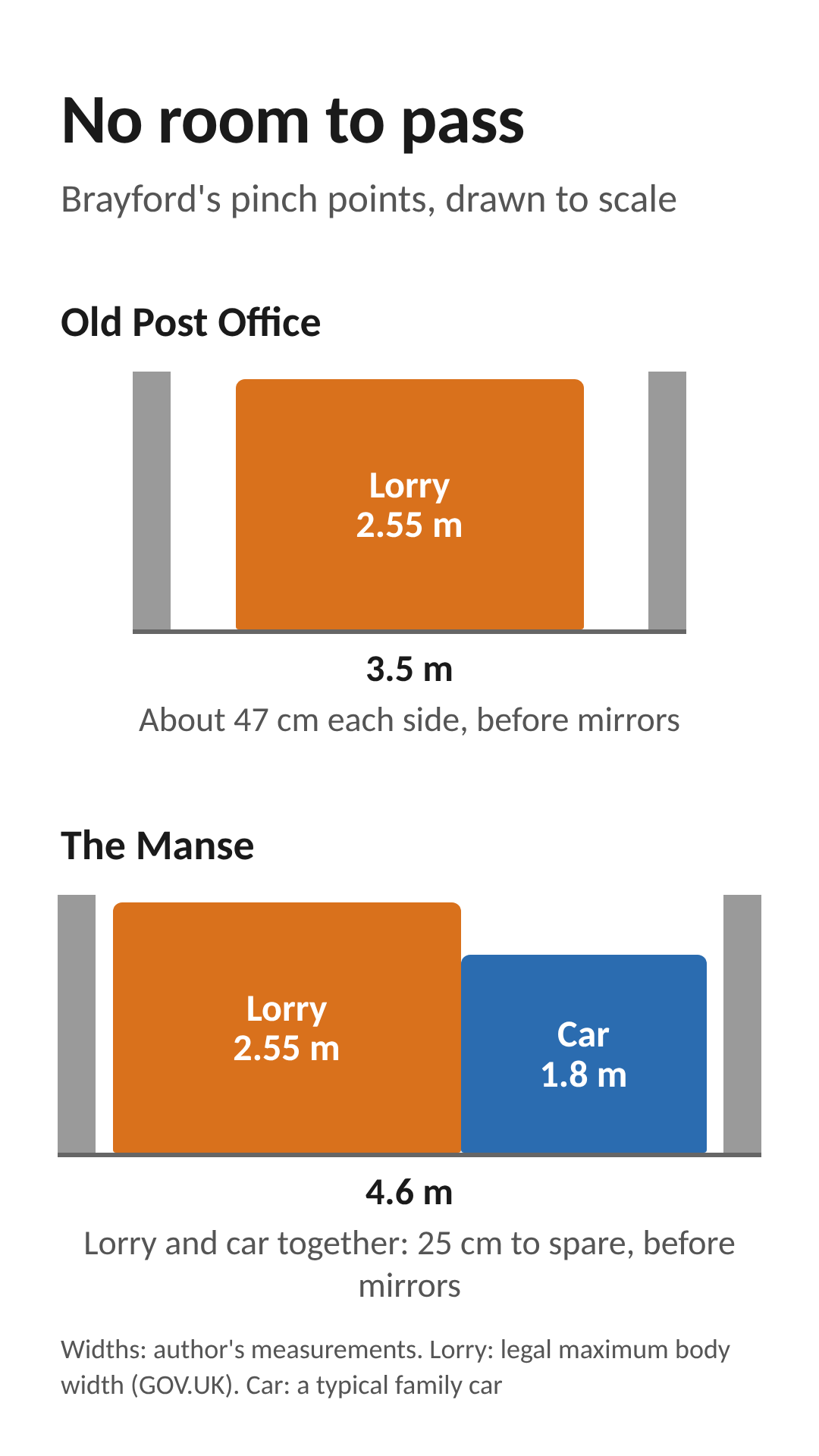
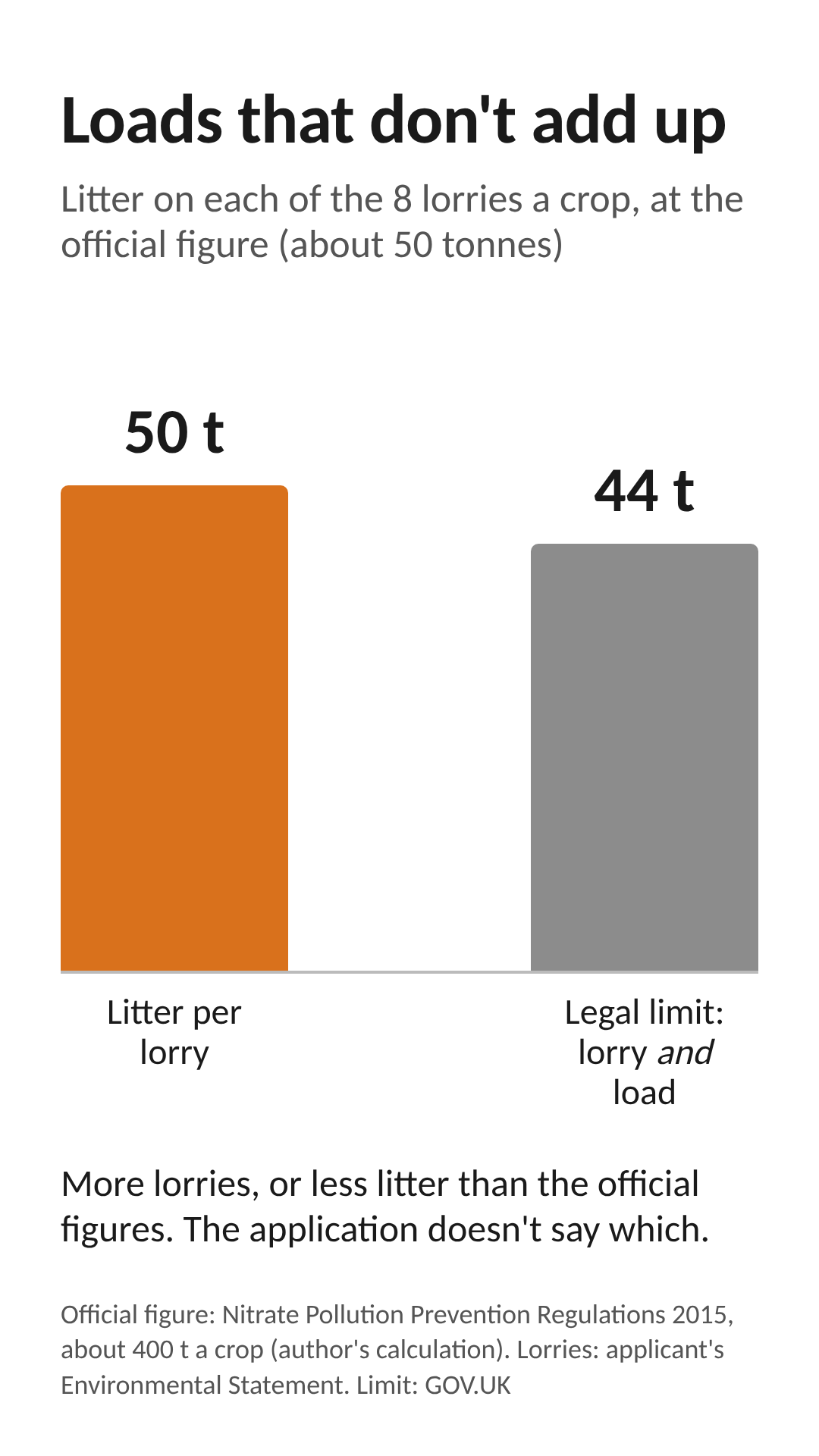
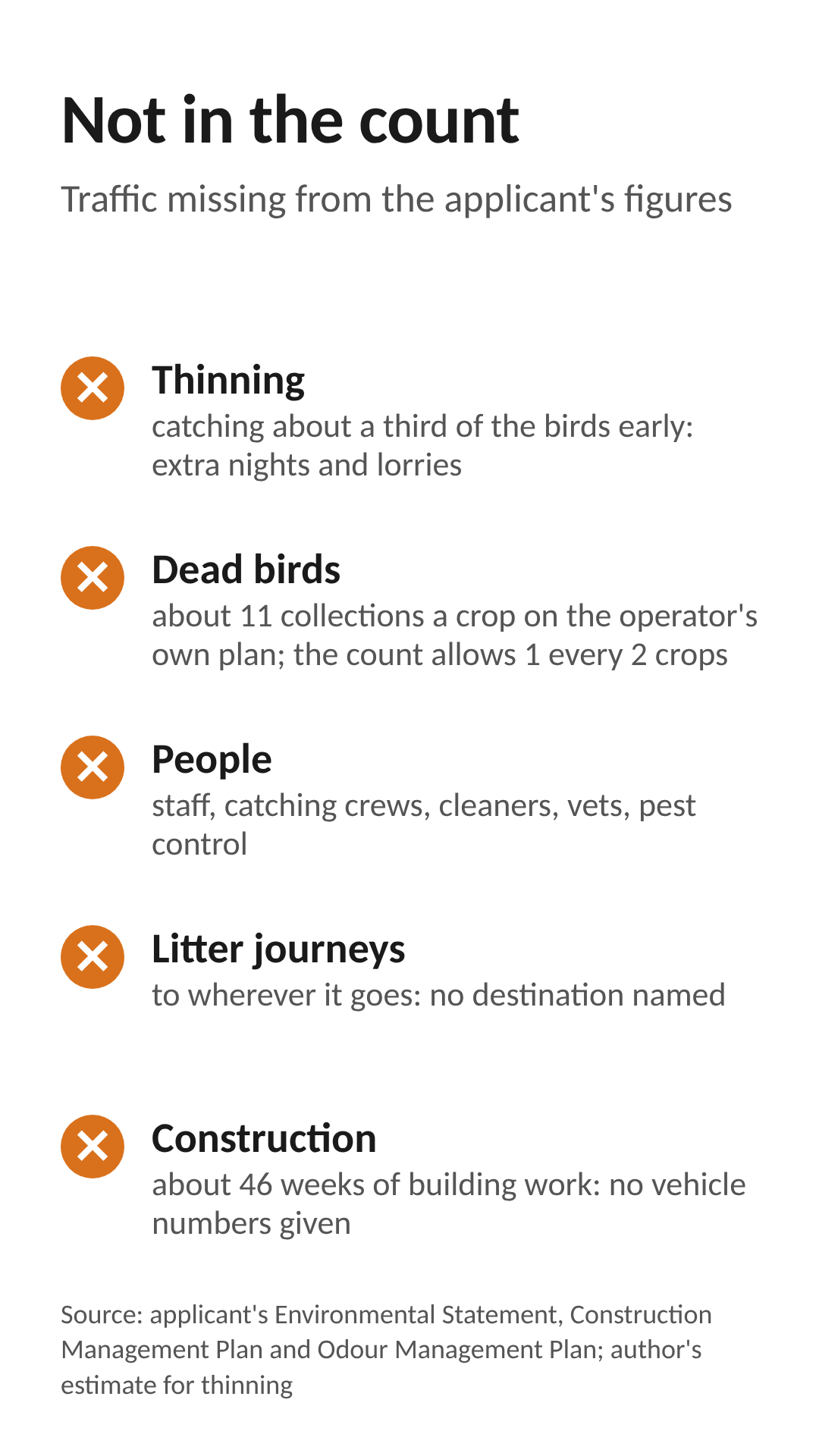
No. Anyone who drives through Brayford will expect to stop to find somewhere or reverse so oncoming traffic can pass. HGV's and tractors with heavy trailers don't have such an easy time reversing. The two week peak period will add ~40 lorries on the lane (author's estimate). Consider peak traffic times, pinch-points, infrequent and short passing points, a dangerous junction from the A399, school runs, pedestrians, horses and inevitable detours through even less suitable roads, and you can see the problems. More pot holes anyone?


Odour
Will we smell it?
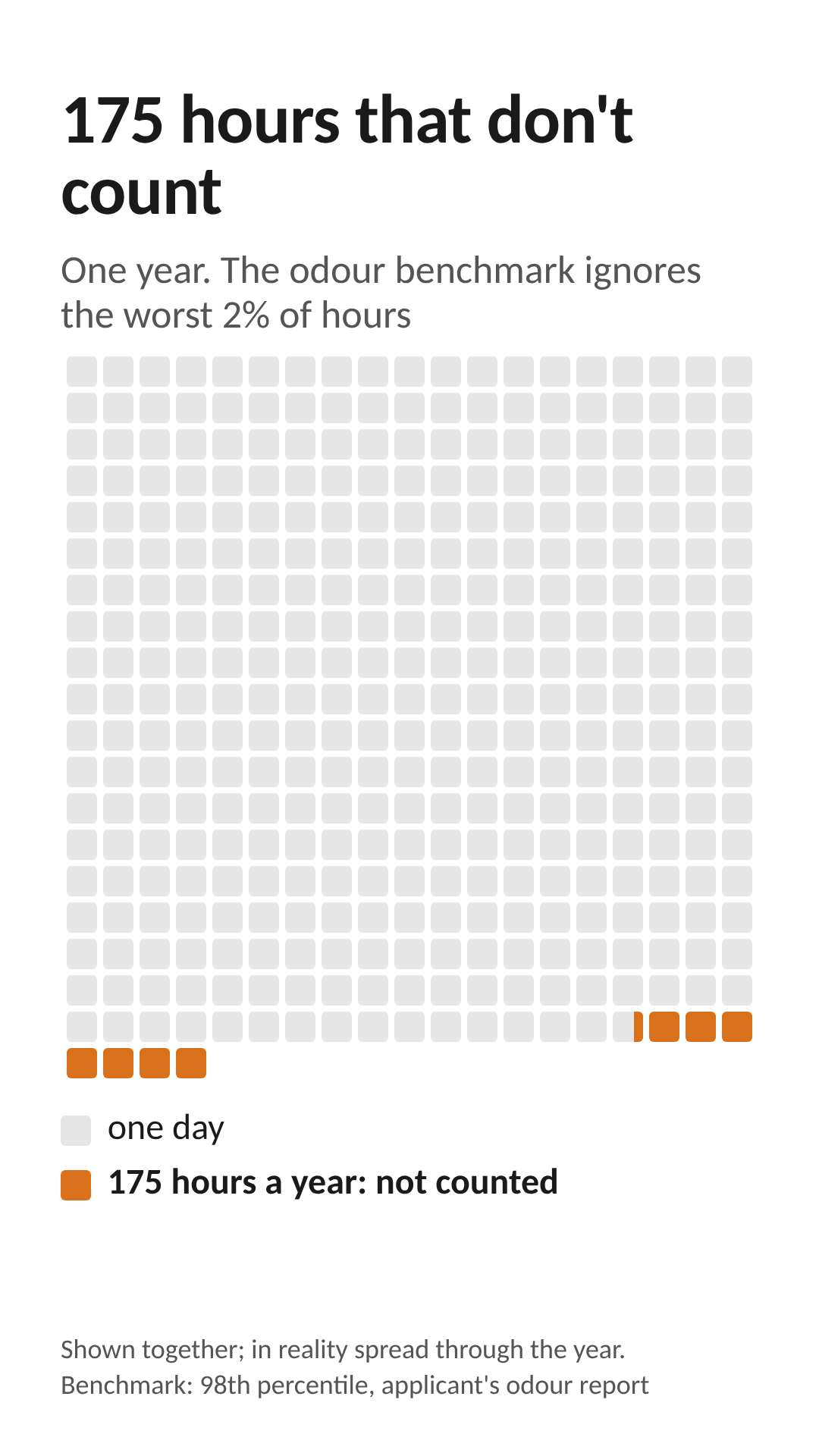
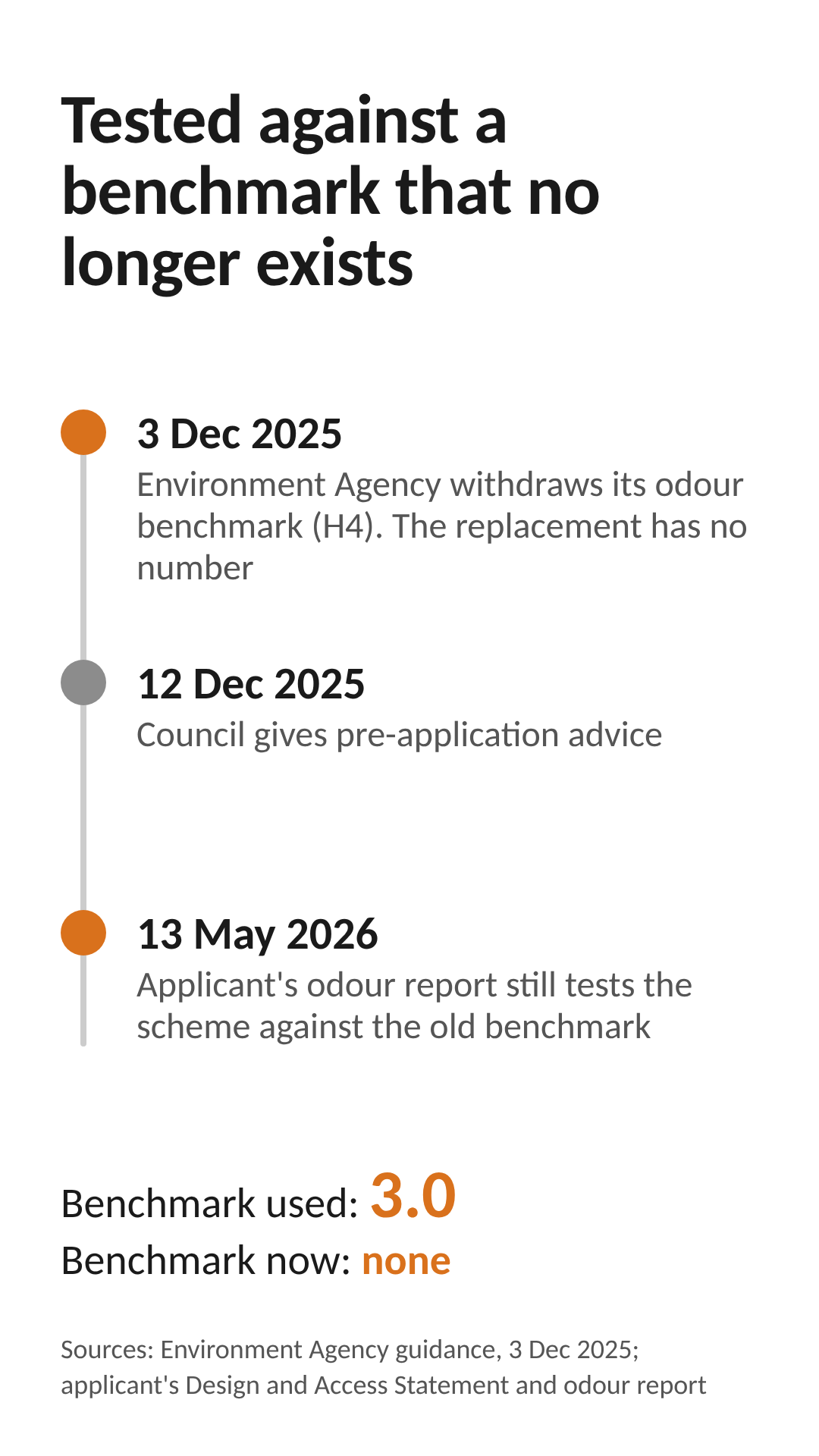
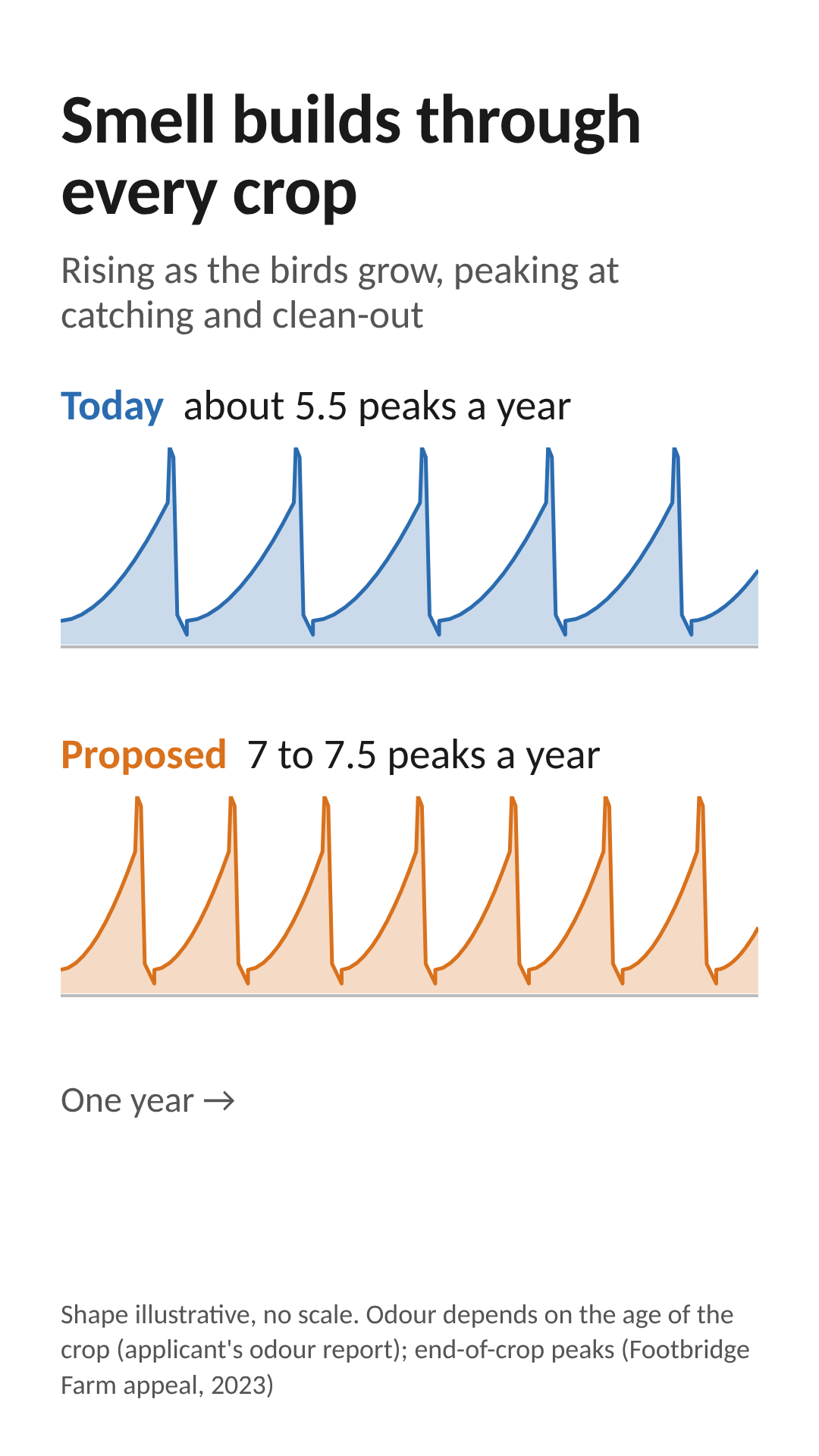
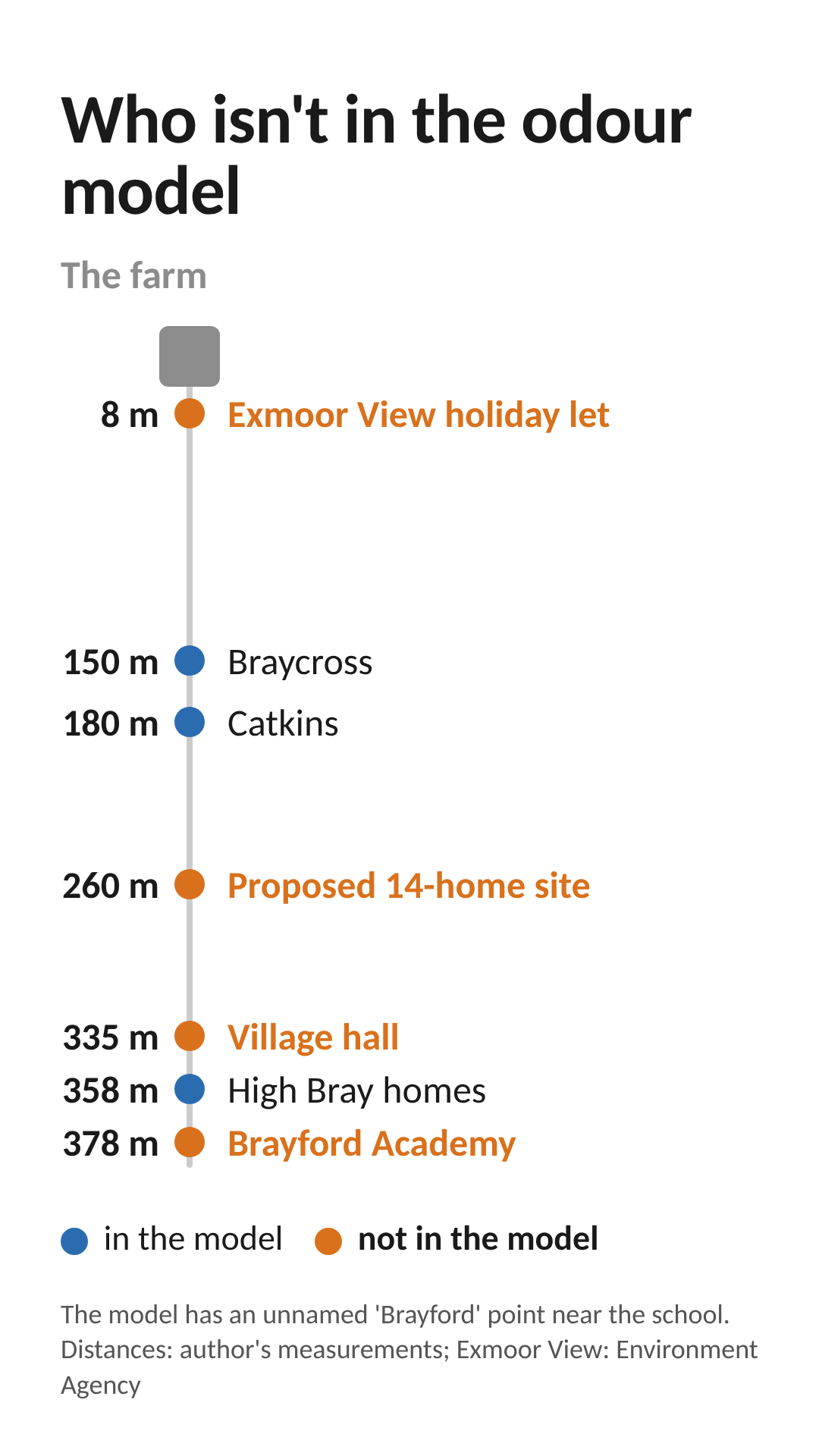
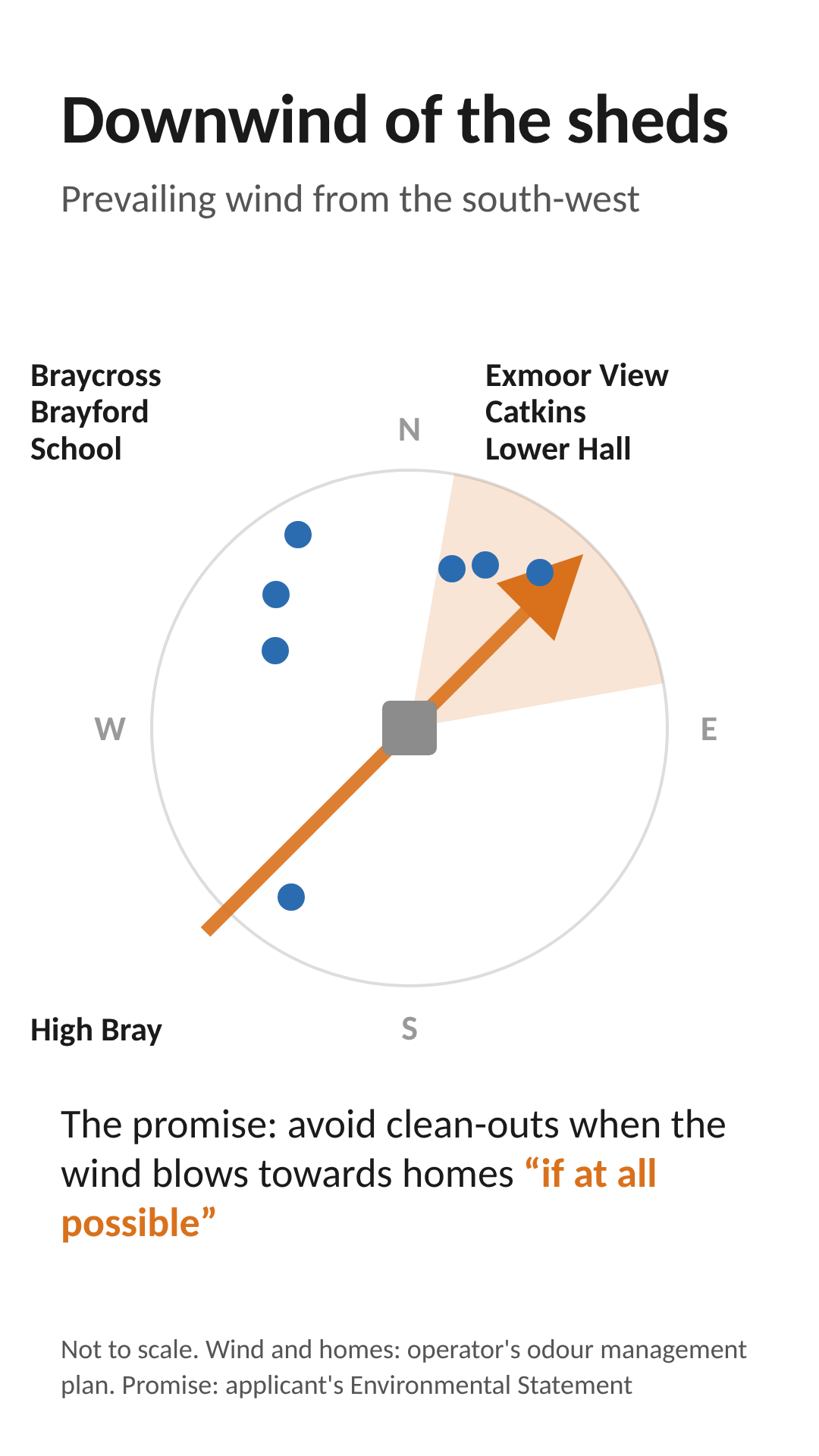
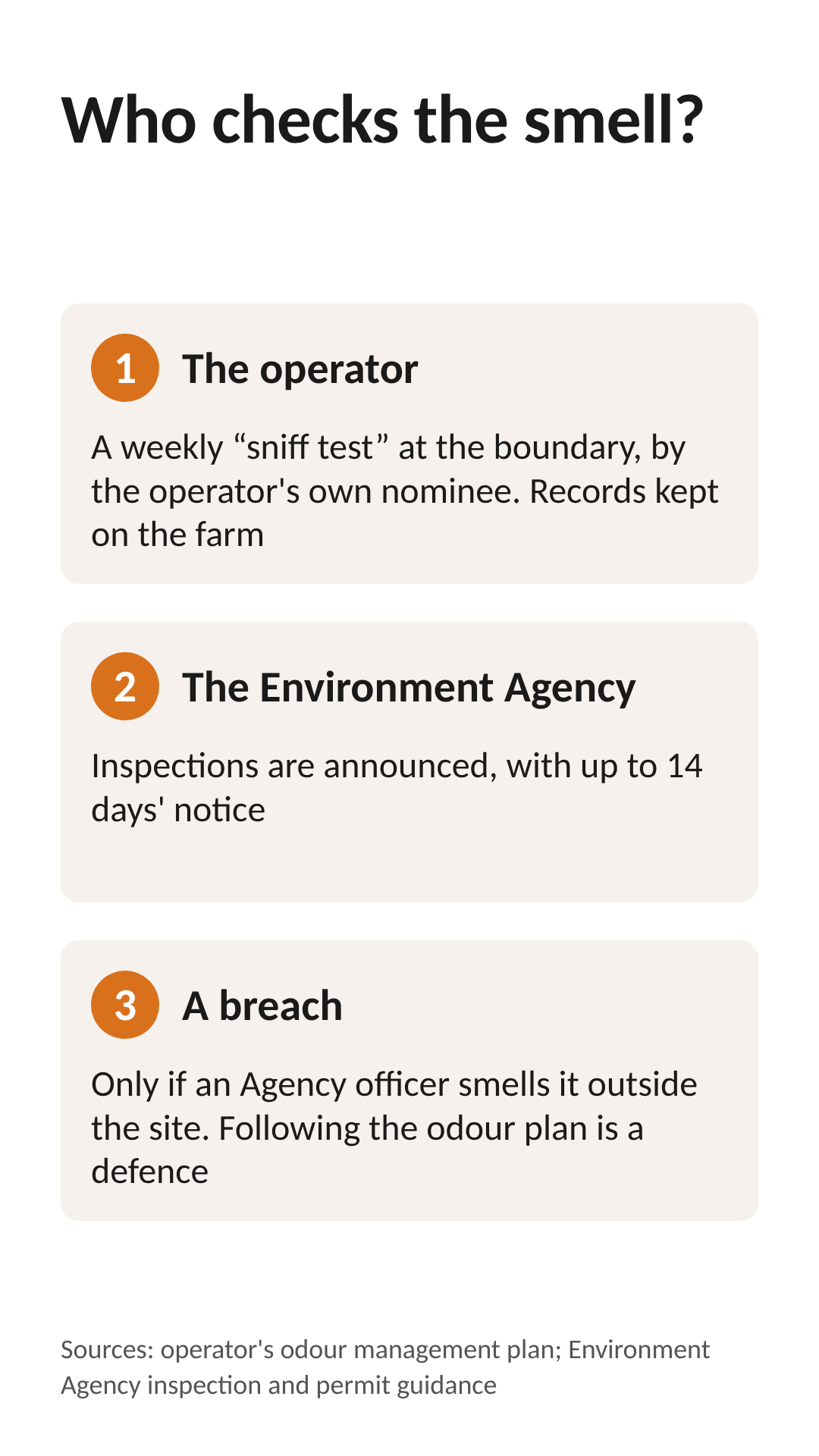
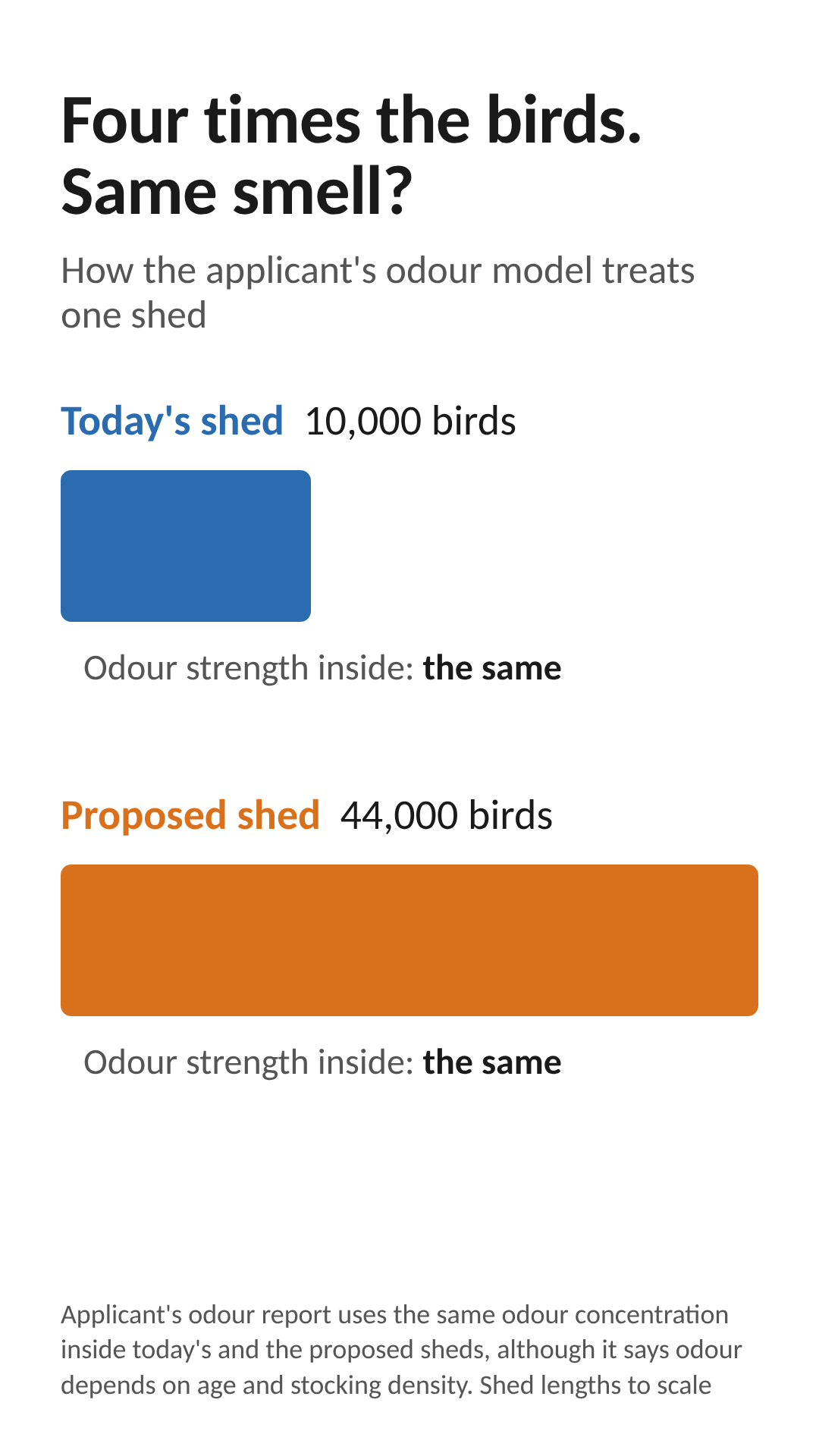
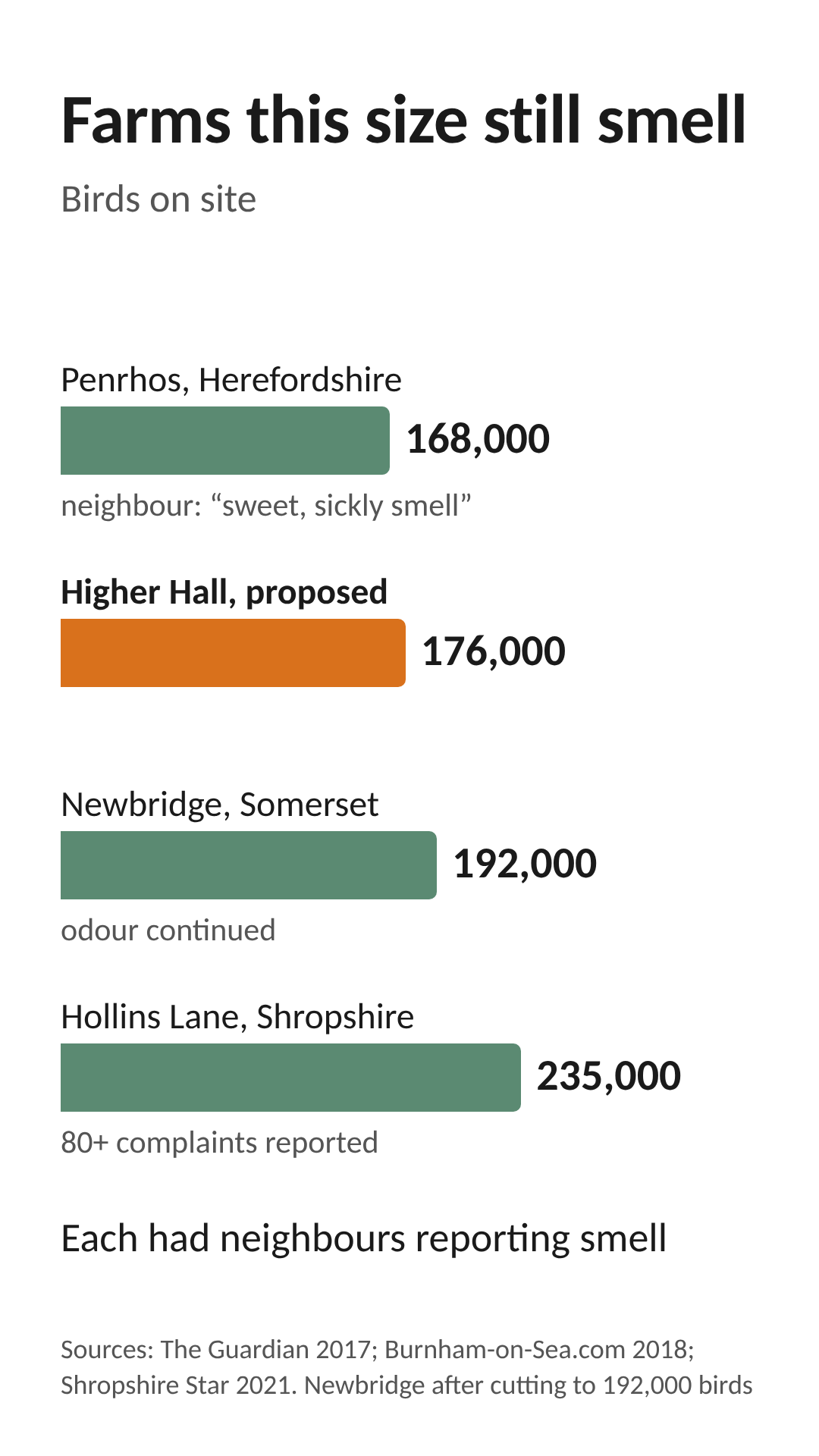
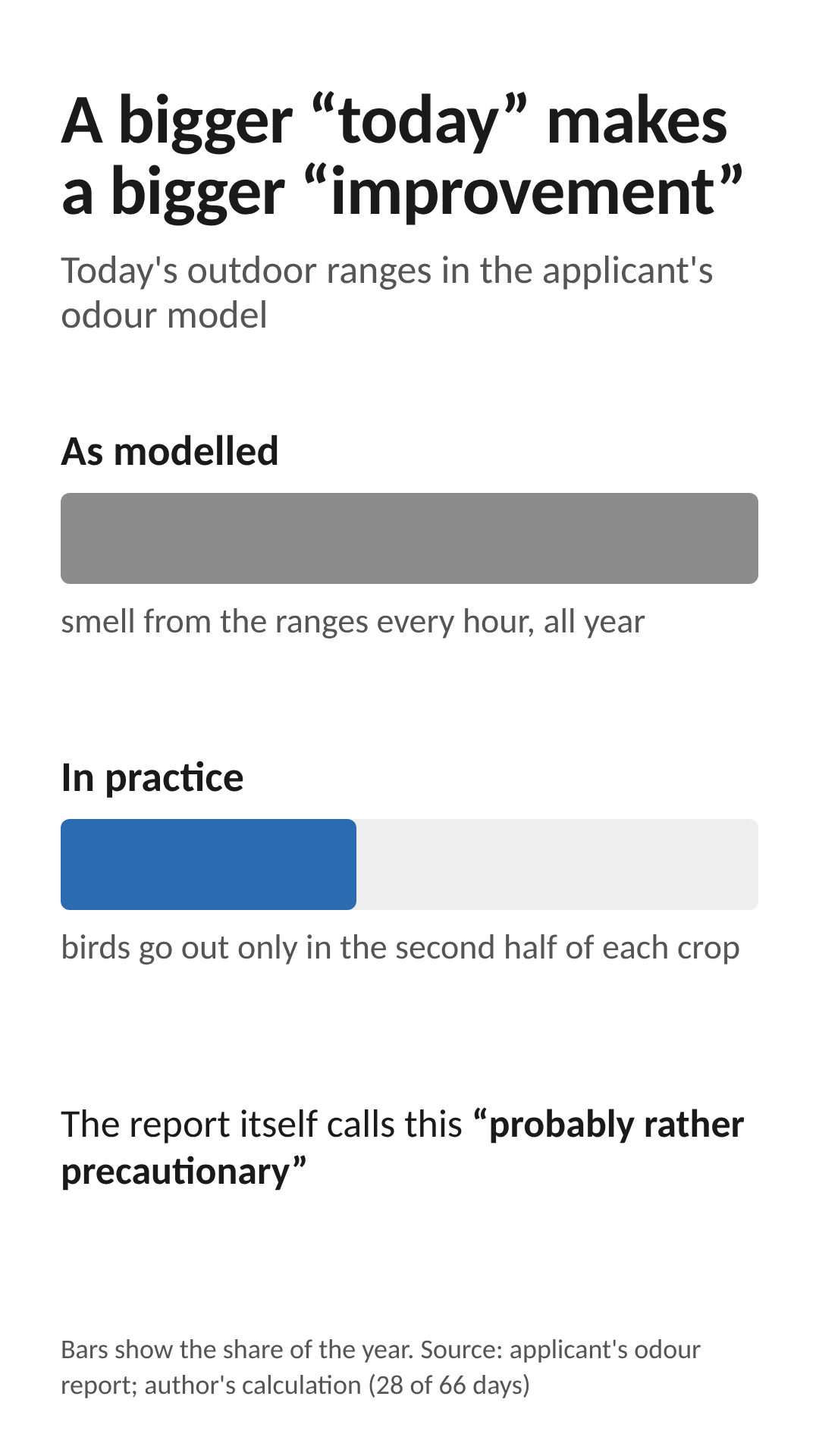
More than likely. Depends on where you are, weather, time of day, time of year, period in the crop-cycle, if litter is spread or piled on fields near you, if you sleep with windows open, if you're out and about in local lanes/countryside/woodland, and how sensitive you are to smells. The environment agency inspects with up to 2 weeks advance notice. The proposal protects us with a "sniff test".


Dust
Will we breathe it in?

Probably, in small amounts. Larger particles settle out of the air, homes closest to the sheds may notice a film of dust on cars, windows and garden furniture. The stuff you don't want to breathe in is the stuff you won't see (PM10, PM2.5). How much reaches you depends on where you are, the wind direction, whether the weather is dry or the air still, the stage of the crop (dust is highest late in the crop and at clean-out), whether the big end fans are running in hot weather, and how sensitive your lungs are, especially for children, older people and anyone with asthma. Long term exposure is a concern.

Ammonia
What will it affect?
People, air, soil, water, plants. The volume of ammonia released per year (4220 Kg = 5.8 million cubic meters of uncompressed gas [not at atmospheric pressure]) is enough to fill the village hall (main area, to the top of the walls) over 11,000 times - that's 31 times a day every day of the year. Ammonia causes microscopic dust to be created in the air, can cause burning eyes and breathing problems for some, it smells and might affect how you spend time outdoors. It acidifies soil, can lead to the production of algae in water and reduce the number of mosses, lichens and wildflowers - nettles, brambles and aggressive grasses will benefit. For people the effects won't be constant, the impact will affect those living closest especially during the emptying and cleaning of sheds. Weather affects area of coverage, pollutants build up over time.

Will we see it?

We do now. It does depend on the time of year and if hedges have been trimmed.
The proposal puts bigger barns on the hillside, and extends them into the field on the right (see above). There will be more buildings, gas tanks and silos on site, though the proposal suggests more planting will hide them.
As you can see from the video, mature trees don't completely obscure these smaller barns from higher views. Will we see the new one? It will be two fields across, with structures up to 9m tall, so yes, probably!


Sketch: field, current barns, industrial site
Showing the farm site and proximity to High Bray. The current field and the one to the right will house the new facility. The new long sheds for egg laying (top left) are not part of this proposal but will add to traffic and pollution.
Visibility
Local water
Could water get polluted?

Water runs down our fields, into culverts, ditches, ponds, streams and on to the river Bray.
It could. The farm sits over groundwater rated highly vulnerable, partially within a drinking water protection zone, with springs, wells and streams downhill. Risk depends on how well the run-off is contained, and where the litter is spread.
Pollutants include phosphorous, nitrogen, ammonia, hydrogen sulphide and dust from birds, bedding and faeces. Very small traces of veterinary pharmaceuticals and antibiotics. Cleaning and sterilising chemicals, coccidiostats and antiparasitics when used. Heavy metals including zinc, copper and arsenic which build up in the environment. No water monitoring is proposed.
Tourism
Will it affect visitors?

Quite possibly. People come here for clean air, quiet lanes, dark skies, woodland walks and the view of Exmoor. There are numerous holiday lets in and around Brayford and a few businesses that rely on delivering their customers clean, fresh country air. Holiday cottage owners near large chicken farms in the UK have said they can’t promise guests the smell won’t be there. Visitors might not like what they smell.